

Client Resources
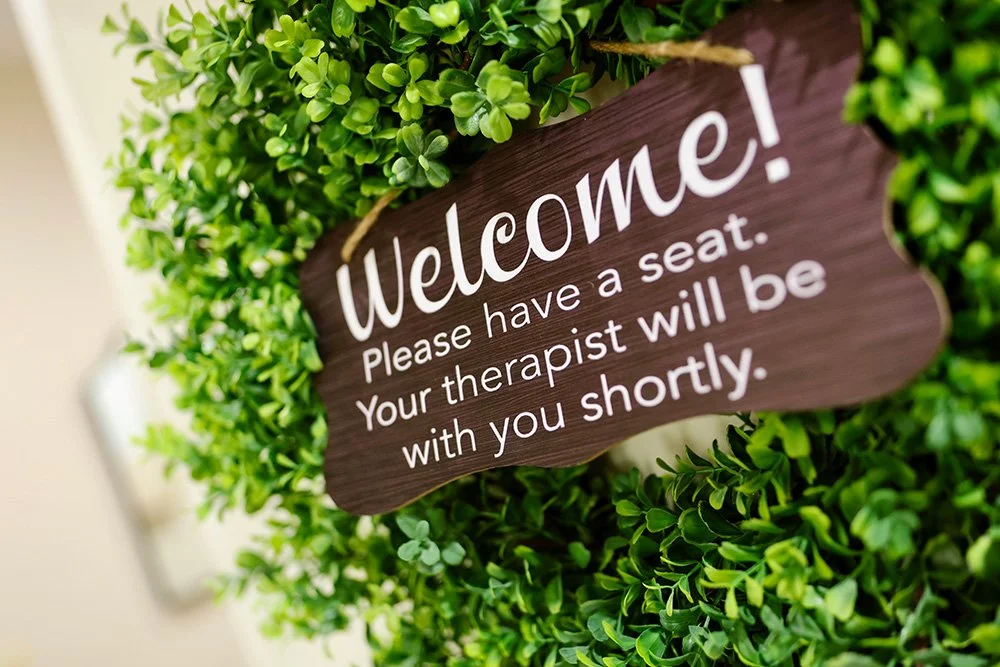
Beginning therapy can come with practical questions about cost, scheduling, what to expect, and where to find additional support. My hope is to make those details as clear and comfortable as possible so you can focus on taking the next step at your own pace.
We’re Here For You.
Getting Started With Therapy
Reach Out
1
You can contact Becoming Therapy by:
Phone: 864-416-1438
Email: gloriababb@becomingtherapysc.com
You can reach out to schedule an appointment or begin with a complimentary 15-minute consultation.
Schedule a Consultation or Appointment
2
During your consultation, we'll briefly discuss what brings you to therapy, answer any questions you may have, and determine whether my experience and scope of practice are a good fit for your needs.
If I don't believe I am the best fit, I will do my best to provide a referral to another therapist who may be better suited to support you. My ethical priority is helping you receive the best care possible.
If we decide to move forward, we can schedule your first appointment.
Begin Where You Are
3
During the first session, we'll review policies and paperwork to make sure your questions are answered.
From there, we'll talk about what brings you to therapy, what you've been experiencing, and what your goals for therapy may look like.
You don't need to arrive with everything figured out. We can begin where you are.
How Often Will We Meet?
Clients commonly attend therapy weekly or biweekly. Everyone has different needs, and some people may benefit from more support than others.
Together, we can discuss a schedule that makes sense for your needs and go from there.
Frequently Asked Questions

-
Your first session is a chance to slow down, share what brings you to therapy, and begin getting to know one another.
We'll talk about what you hope to work on and create a comfortable space to begin your journey at your own pace.
-
Therapy is an investment in yourself. Clients commonly attend weekly or biweekly, but everyone's support needs are different.
We can discuss together how often therapy may be most helpful for you.
-
Individual sessions are typically 60 minutes. Couples sessions are available in 60- or 80-minute options.
-
We work with children ages 5 and up, young adults, women of all ages, and couples.
-
Yes. We offer play therapy for children ages 5 and up.
-
Yes. I provide couples counseling for partners who want to strengthen communication, connection, trust, and their relationship.
-
Yes. We offer both in-person and virtual therapy.
-
Yes. Virtual therapy is available to clients who are physically located in South Carolina at the time of their session.
-
Yes. I provide bilingual therapy in both English and Spanish.
-
I do not currently accept insurance, but I can provide a superbill upon request for clients seeking possible out-of-network reimbursement.
-
Please provide at least 24 hours' notice whenever possible.
You may call or leave a voicemail at 864-416-1438, email gloriababb@becomingtherapysc.com, or send a message through the client platform.
-
Therapy may be right for you if you're feeling overwhelmed, stuck, disconnected, or simply ready for a little support and clarity.
You don't have to have all the answers. Sometimes reaching out is the first gentle step toward support, healing, and becoming.
-
It's okay to feel nervous about starting therapy. You don't have to know what to say or where to begin.
We'll take it one gentle step at a time, at a pace that feels right for you.
-
No. You're welcome to complete your paperwork online before your appointment, or we can review and complete it together during your first session.
Payments, Fees & Policies

-
I believe starting therapy should feel comfortable and transparent, including understanding the cost of your care. Before scheduling your first appointment, I want you to feel clear about the financial side of therapy.
Session Fees
Initial Consultation
Free | 15 minutesIndividual Therapy
$125 | 60 minutesCouples Therapy
$145 | 60 minutes
$165 | 80 minutesAdditional 60-Minute Individual Session
$150 -
We accept:
Visa
Mastercard
American Express
Discover
Health Savings Account (HSA)
Cash
Zelle
Venmo
-
We do not currently accept insurance. However, I can provide a superbill upon request for clients who would like to seek reimbursement through their insurance provider.
Reimbursement is determined by your individual insurance plan, so I recommend contacting your insurance company directly to learn more about your out-of-network benefits.
-
A limited sliding scale is available. Please reach out if you would like to discuss availability.
-
Your appointment time is reserved specifically for you. If you need to cancel or reschedule, please provide at least 24 hours' notice whenever possible.
I allow one late cancellation and one no-show without a fee. After that, appointments canceled with less than 24 hours' notice and missed appointments may be charged the full session fee.
I understand that unexpected situations and emergencies happen, and fees may be waived when circumstances warrant.
-
Under the federal No Surprises Act, clients have the right to receive a Good Faith Estimate of expected costs for therapy services. A Good Faith Estimate provides an estimate of the expected charges for your care based on the services you are scheduled to receive.
We'll review session fees, accepted payment methods, the cancellation policy, and any other costs that may apply before you begin. My goal is for there to be no surprises, just a clear understanding of your financial responsibility.
I welcome any and all questions.
Helpful Mental Health Resources
The following books and organizations may provide additional education, perspective, and support alongside therapy.
Recommended Books
What Happened to You? Conversations on Trauma, Resilience, and Healing
Bruce D. Perry, M.D., Ph.D. and Oprah Winfrey
Offers a compassionate perspective on trauma, resilience, relationships, and understanding how experiences can shape us.
What My Bones Know: A Memoir of Healing from Complex Trauma
Stephanie Foo
A powerful memoir exploring complex trauma, healing, and what it can look like to move forward while carrying difficult experiences.
The Untethered Soul: The Journey Beyond Yourself
Michael A. Singer
Offers a practical framework for understanding our inner dialogue and developing a different relationship with our thoughts.
Set Boundaries, Find Peace: A Guide to Reclaiming Yourself
Nedra Glover Tawwab
Explores how to recognize your needs, trust your voice, and establish healthier boundaries without unnecessary guilt.
The Origins of You: How Breaking Family Patterns Can Liberate the Way We Live and Love
Vienna Pharaon, LMFT
Explores how family-of-origin wounds can influence adult relationships, patterns, and the ways we understand ourselves.
It Didn’t Start with You: How Inherited Family Trauma Shapes Who We Are and How to End the Cycle
Mark Wolynn
Explores how unresolved family trauma and difficult experiences may be carried across generations.
The Seven Principles for Making Marriage Work
John M. Gottman, Ph.D. and Nan Silver
Offers couples practical, compassionate guidance for better understanding their relationship, communicating, and strengthening connection.
Adult Children of Emotionally Immature Parents: How to Heal from Distant, Rejecting, or Self-Involved Parents
Lindsay C. Gibson, Psy.D.
Helps readers understand how early relationships may continue to influence connection, communication, and self-care in adulthood.
The Pain We Carry: Healing from Complex PTSD for People of Color
Natalie Y. Gutiérrez, LMFT
Explores complex trauma alongside racism, migration, intergenerational trauma, family dynamics, and systemic oppression while offering therapeutic tools for healing.
National Mental Health Resources
National Alliance on Mental Illness (NAMI)
A national nonprofit providing mental health information, education, advocacy, and support. The NAMI HelpLine is available Monday–Friday, 10 a.m.–10 p.m. ET at 1-800-950-6264, and users can text NAMI to 62640.
Visit NAMI
Mental Health America (MHA)
A national nonprofit focused on promoting mental health, prevention, screening, education, and access to care.
Toll-free: 1-800-969-6642
Address: 500 Montgomery Street, Suite 820, Alexandria, VA 22314.
Visit Mental Health America
988 Suicide & Crisis Lifeline
Provides free, confidential crisis support 24/7. Call or text 988. For Spanish, callers can press 2, or text AYUDA to 988.
Visit the 988 Lifeline
American Foundation for Suicide Prevention (AFSP)
A national nonprofit focused on suicide prevention, research, education, advocacy, and support for people affected by suicide.
Toll-free: 1-888-333-AFSP (2377)
Address: 199 Water St., 11th Floor, New York, NY 10038.
Visit AFSP
Child Mind Institute
Provides mental health information and clinical resources for children, teens, young adults, and families.
Phone: 212-308-3118.
Visit Child Mind Institute
The Trevor Project
Provides free, confidential crisis support and mental health resources for LGBTQ+ young people.
Phone: 1-866-488-7386
Text: START to 678-678.
Visit The Trevor Project
Postpartum Support International (PSI)
Provides education, resources, and support related to perinatal and postpartum mental health.
HelpLine: 1-800-944-4773
Press 1 for Spanish or 2 for English. PSI notes that its HelpLine is not an emergency service.
Visit Postpartum Support International
Mental Health Resources in Greenville, SC
NAMI Greenville
Provides education, peer and family support, advocacy, and mental health resources throughout Greenville County.
130 Industrial Drive, Suite A
Greenville, SC 29607
Phone: 864-331-3300.
Visit NAMI Greenville
Greater Greenville Mental Health Center
Part of South Carolina’s public mental health system, providing outpatient services for children, adolescents, adults, and families in Greenville County.
Greenville Clinic
124 Mallard Street
Greenville, SC 29601
Phone: 864-241-1040.
Visit Greater Greenville Mental Health Center
Julie Valentine Center
Provides advocacy, crisis intervention, therapy, and support for survivors of sexual assault and child abuse. Services are also available in Spanish.
2905 White Horse Road
Greenville, SC 29611
24/7 Crisis Hotline: 864-467-3633
Main Office: 864-331-0560.
Visit Julie Valentine Center
Queer Wellness Center of Greenville
An LGBTQ+ affirming nonprofit providing access to resources, wellness programming, community support, and affirming services throughout the Upstate.
Current public location:
1200 Woodruff Road, Suite C-12
Greenville, SC 29607
Phone: 864-209-1484.
Visit Queer Wellness Center
Crisis & Emergency Resources
Becoming Therapy is not an emergency or crisis center. Our services are designed for ongoing therapeutic support, personal growth, healing, and meaningful change.
If you are experiencing an immediate mental health emergency or are in danger of harming yourself or someone else, please call 911 or go to the nearest emergency department for immediate assistance.
911
Call 911 for an immediate medical emergency, imminent danger, or another situation requiring emergency assistance.
988 Suicide & Crisis Lifeline
Call or text 988. Support is available 24/7 for people experiencing mental health or emotional crises, including concerns about suicide.
South Carolina Mobile Crisis
1-833-364-2274
Available 24/7 throughout South Carolina. A trained clinician can assess the situation and, when appropriate, a mobile crisis team may respond in the community.
Greater Greenville Mental Health Center
124 Mallard Street
Greenville, SC 29601
Phone: 864-241-1040
Prisma Health Greenville Memorial Hospital Emergency Department
701 Grove Road
Greenville, SC
The emergency department is open 24/7 and can provide care for psychiatric emergencies.
Domestic Violence, Sexual Assault & Child Safety Resources
911
Call 911 if you or someone else is in immediate danger.
Safe Harbor
Provides confidential support, emergency shelter, safety planning, counseling, advocacy, support groups, transitional housing, and assistance for survivors of domestic abuse and their children throughout Greenville and surrounding Upstate communities.
24/7 Hotline: 1-800-291-2139
Julie Valentine Center
Provides Greenville-area support for sexual assault and child abuse, including crisis intervention, advocacy, and therapy. Services are also available in Spanish.
24/7 Crisis Hotline: 864-467-3633
South Carolina Department of Social Services
For reporting suspected child abuse or neglect.
Greenville County DSS: 864-467-7700
Still Have Questions?
You don't have to be completely sure to begin.
If you've been thinking about therapy but aren't quite ready to take the next step, that's okay. You don't need to know exactly what to say, have everything figured out, or even be certain that therapy is right for you.
Sometimes the first step is simply reaching out and saying, "I think I might need some support."
From there, we can talk about what you're experiencing, what you're hoping for, and whether therapy feels like the right fit for you. There is no pressure to have all the answers.
You deserve a space where you can come as you are, be heard without judgment, and begin exploring what healing and becoming might look like for you.
You don't have to know the whole path. You only have to take the next step.
Please reach out with any questions you may have. I'll be happy to help answer them and put your mind at ease.